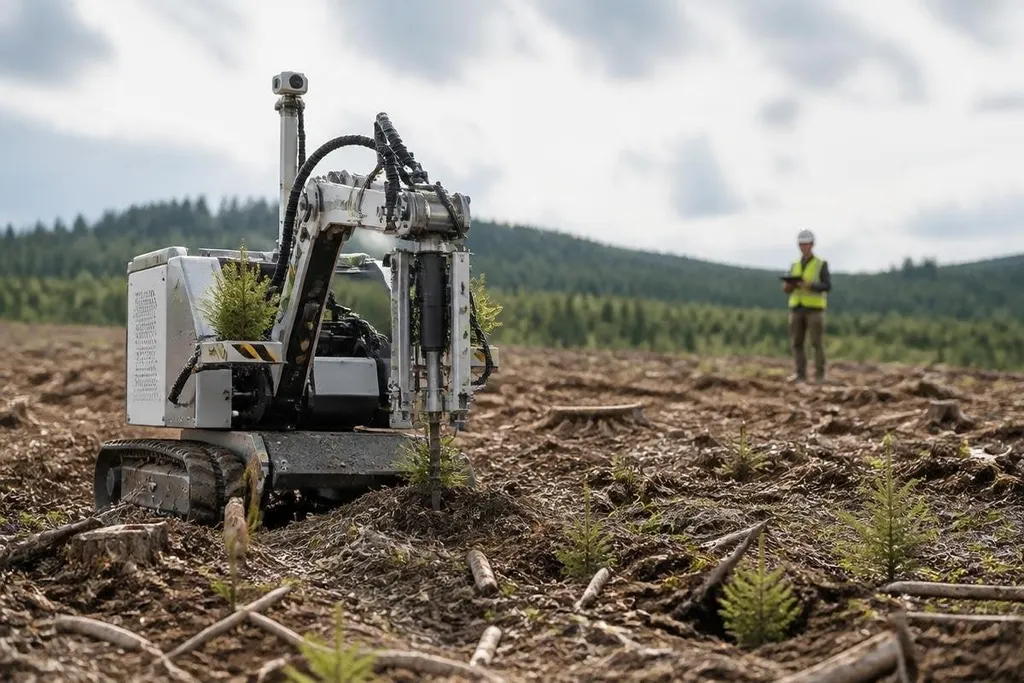
Tree-planting robots still face a basic field problem: a sapling must go into the right soil, at the right depth, without damaging its roots. AI can help the robot make that choice from camera and sensor data, but no evidence pack was supplied here to confirm a named machine, price, planting rate, or live deployment.
Quick read
- AI can sort planting spots by soil, slope, and nearby plants when the robot has suitable sensors.
- The useful result is fewer poor planting points, not a robot that can work anywhere.
- Buyers should ask for field data, failure rates, and the cost of fixing missed or damaged saplings.
Where AI fits in the planting process
A planting robot has to locate a safe place, open a hole, place the sapling, and cover its roots. AI may help with the first step by reading images of the ground and marking rocks, fallen branches, existing plants, or bare soil.
That work usually falls under machine vision, which means software reads camera images to identify objects or surface features. A second system can combine those images with position data, slope readings, or soil measurements. The robot then chooses among the spots its hardware can reach.
The limit is physical. Software can't make a narrow wheelbase stable on a steep slope, and it can't make a digging tool work through ground the machine can't break.
Why site choice matters
A robot that plants at fixed intervals may cover ground quickly while putting saplings in poor locations. AI changes the task from following a simple grid to choosing spots from the conditions in front of the robot.
That choice could reduce wasted saplings and repeat visits, but the claim needs field records. A useful trial would report the number of planting attempts, missed spots, damaged roots, and saplings still alive after a set period. Without those figures, a video of a robot placing one plant says very little about the work.
Roots, slopes, and wet ground can change how a planting robot places each sapling. Tree-planting robot reporting can tie an AI claim to field conditions, planting rate, and saplings alive after a set period. Those records lead into the work AI still leaves for people.
The hard parts AI can't remove
Outdoor ground changes from one metre to the next. Wet soil can affect traction, while dry soil can resist a drill.
Tall grass can hide stones or existing plants from a camera. Cloud, dust, shadows, and rain can also change what the sensors see.
AI needs a way to flag uncertainty. If the system can't classify a spot, the robot should stop, ask for a remote check, or leave that location for a person. A planting system that keeps moving after a bad reading may create more repair work than it saves.
Tree species add another constraint. Roots, container sizes, planting depth, and spacing can vary by project. The software needs those rules before it can choose a valid location. No evidence supplied with this brief confirms which species, terrain, or weather conditions any current system supports.
What a useful trial should measure
The right test compares robot work with the method already used on the same type of land. Planting speed matters, but survival and repair costs matter more over time.
A trial should record the number of saplings planted during a full work period, missed locations or depths, decisions that needed a remote operator or nearby worker, living saplings after the project’s stated review period, and the cost of fixing sensor, drive, digging-tool, or software faults.
I’d treat AI tree-planting claims as unproven until a project publishes those numbers across changing ground conditions.
A buyer’s checklist
Before paying for a pilot, check the system against the work you actually need:
- Tree details: name the species and planting method.
- Site record: record slope, soil type, weather, and ground cover.
- Planting target: set a minimum depth and placement accuracy.
- Human handoff: define when the robot must stop and call a person.
- Survival check: count living saplings after an agreed review period.
- Full cost: price transport, charging, supervision, and repairs.
Those details turn a planting demo into a test of an automation system. The next useful proof will be a dated field report that links AI decisions to surviving trees, not another short clip of a robot digging one hole.